Journal
The Silent Giant of Southern Africa
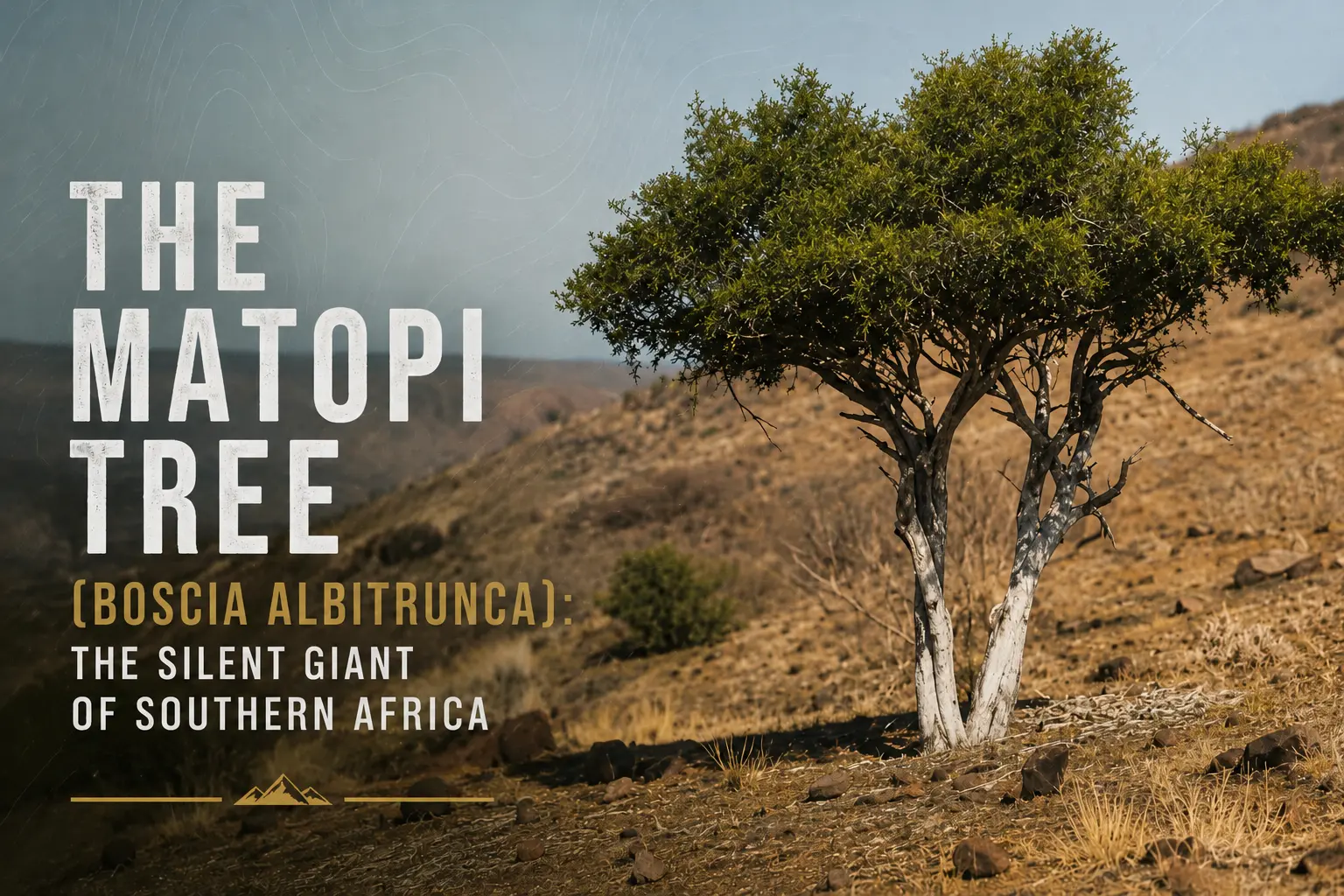
Across the dry plains of southern Africa, where the sun beats relentlessly and rainfall is often scarce, one remarkable tree has quietly supported wildlife, people, and entire ecosystems for centuries. The Matopi tree, more widely known as the Shepherd's Tree (Boscia albitrunca), is one of Africa's most resilient and valuable indigenous trees. With its deep-reaching roots, evergreen canopy, and remarkable ability to survive where few other trees can, it has earned a legendary status among farmers, conservationists, and outdoor enthusiasts alike. Found throughout South Africa, Botswana, Namibia, Zimbabwe, and neighbouring countries, the Matopi tree is far more than just another tree in the bushveld. It is a source of food, medicine, shelter, livestock fodder, and even cultural significance. For anyone who spends time exploring the African wilderness, understanding the importance of this extraordinary species adds another layer of appreciation for the landscapes we enjoy.
A Master of Survival: The Matopi tree thrives where many other species simply cannot. Growing in arid savannas, sandy plains, and semi-desert regions, it often survives annual droughts that would kill less adapted vegetation. Mature trees can reach heights of around 10 to 15 metres, developing thick, deeply fissured bark and a broad, rounded crown that provides welcome shade across otherwise exposed landscapes. One of its greatest secrets lies beneath the ground. The tree develops an astonishing root system that can penetrate astonishing depths in search of underground water reserves. Some estimates suggest roots may extend over 60 metres below the surface, making them among the deepest recorded for any tree species. This incredible adaptation allows the Matopi tree to remain green throughout much of the year, even when surrounding vegetation has turned brown. Its evergreen leaves are thick and leathery, reducing water loss while continuing photosynthesis during prolonged dry periods. This constant greenery makes the tree an important food source when little else is available.
A Lifeline for Wildlife: Few indigenous trees provide as much value to wildlife throughout the year as the Matopi. During harsh winters and prolonged droughts, its leaves become an essential source of nutrition for browsing animals including kudu, giraffe, impala, eland, steenbok, and many other antelope species. Even elephants regularly feed on its foliage and branches. The tree's dense canopy also creates a cooler microclimate beneath its branches. Birds nest within its protective cover, while reptiles and small mammals seek refuge from the intense African heat. Insects, butterflies, and pollinating bees are attracted to its flowers, ensuring the continuation of countless ecological relationships. Its small berries become an important seasonal food source for numerous bird species, which in turn assist with seed dispersal across the landscape. In many ways, the Matopi tree acts as an ecological hub, supporting life at multiple levels of the food chain.
A Tree That Fed Generations: Long before modern agriculture expanded across southern Africa, indigenous communities understood the remarkable value of the Matopi tree. Almost every part of the tree could be utilised. The edible berries, although relatively small, were eaten fresh when available. The leaves were occasionally browsed by livestock and, during difficult times, were also consumed by people after suitable preparation. Perhaps the most fascinating use involved the roots. The large underground roots contain valuable starches that were traditionally roasted or processed into a form of flour during times of food scarcity. This emergency food source helped sustain communities during prolonged droughts and famine, demonstrating the tree's importance as a survival resource. The roots also provided moisture. Travellers crossing dry landscapes sometimes cut sections of root to obtain small amounts of drinkable water, an invaluable resource in remote wilderness areas.
Traditional Medicine Passed Through Generations: For centuries, traditional healers have recognised the medicinal properties of the Matopi tree. Various parts of the plant have been used in remedies aimed at treating a wide range of ailments. Bark preparations have traditionally been used to assist with stomach complaints, digestive disorders, and inflammatory conditions. Decoctions made from the roots have been used for headaches, eye infections, fever, and respiratory illnesses, while leaf extracts have also featured in traditional herbal medicine. Although many of these traditional uses continue today, scientific research is still investigating the specific compounds responsible for the tree's medicinal properties. As with all traditional medicines, proper knowledge and caution remain essential.
A Valuable Resource for Livestock Farmers: In many farming communities, the Matopi tree serves as a natural insurance policy against drought. When grazing becomes scarce, farmers often rely on the tree's nutritious leaves and smaller branches to supplement livestock feed. Goats, cattle, sheep, and game animals all benefit from its year-round foliage. Because the tree remains productive during dry seasons, it plays an important role in maintaining animal health when grasslands have been severely depleted. Responsible harvesting allows farmers to utilise the tree without causing permanent damage, making it one of the most sustainable natural fodder sources available in arid regions.
Surprisingly Useful Timber: Although the wood of the Matopi tree is exceptionally dense and durable, it is not commonly harvested for large-scale construction because the tree grows relatively slowly and is ecologically valuable. Where wood is available, however, it has traditionally been used for fence posts, tool handles, walking sticks, yokes, and household implements. Its hardness makes it extremely resistant to wear and decay, allowing products made from its timber to last for many years. Its excellent firewood qualities are also well known. The wood burns slowly, produces intense heat, and creates long-lasting coals, making it highly prized for cooking fires in rural communities.
A Cultural Symbol Across Southern Africa: The Matopi tree occupies a respected place within many African cultures. In Botswana, it is widely known as the Shepherd's Tree because shepherds and travellers historically rested beneath its generous shade while tending livestock across the open veld. Some communities regard ancient specimens as sacred gathering places where meetings, ceremonies, and important discussions took place. Large trees often became landmarks used for navigation long before maps and GPS systems existed. Because these trees can live for several centuries, many have silently witnessed generations of families, wildlife migrations, and changing landscapes.
A Champion of Conservation: The ecological importance of the Matopi tree extends far beyond its immediate surroundings. Its deep roots help stabilise sandy soils and reduce erosion, while its evergreen canopy provides valuable habitat throughout the year. As climate change increases pressure on southern Africa's already dry environments, drought-resistant indigenous species like the Matopi may become even more important. Their ability to survive extreme conditions while supporting biodiversity makes them valuable allies in conservation and habitat restoration projects. Protecting mature Matopi trees not only preserves individual specimens but also safeguards countless ecological interactions that depend upon them.
An Icon of the African Wilderness: There is something deeply reassuring about encountering a mature Matopi tree after hours of travelling through open bushveld. Its broad canopy promises shade, its evergreen leaves hint at hidden water deep below the earth, and its presence reminds us that resilience often grows quietly. For countless generations, this remarkable tree has provided food when supplies were scarce, medicine when illness struck, shelter from relentless heat, and nourishment for both wildlife and livestock. It has become woven into the history of southern Africa in ways few other trees can match. Whether you are a hiker exploring remote trails, a hunter waiting beneath its branches, a farmer relying on its drought-resistant foliage, or simply someone who appreciates the beauty of indigenous landscapes, the Matopi tree stands as one of Africa's greatest natural treasures. It is more than a tree-it is a symbol of endurance, generosity, and the remarkable ability of nature to flourish against the odds.
New drops and field notes.
Built in South Africa · ESTD 2025