Journal
The Forgotten South African Trek to Argentina
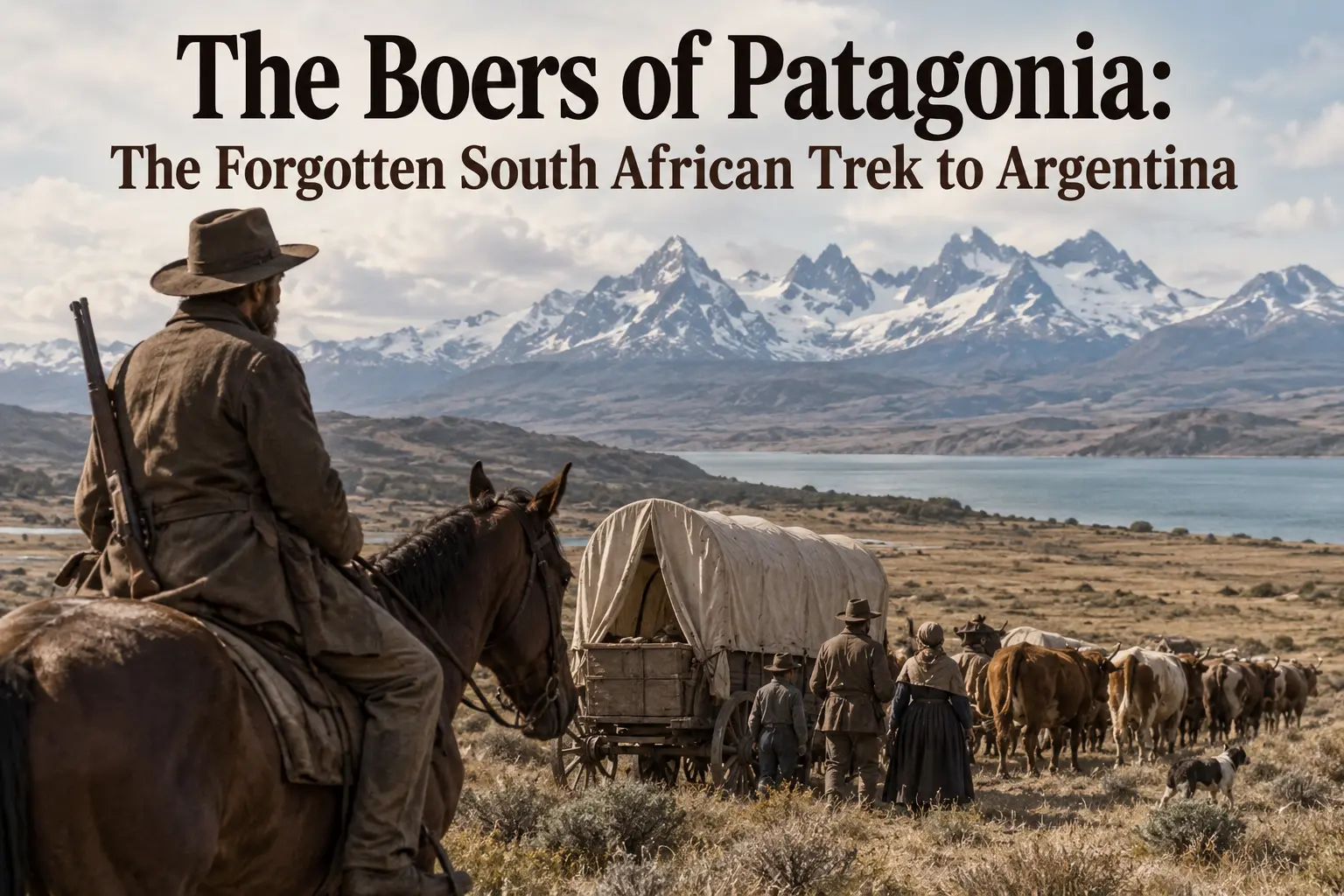
There is a strange little corner of South African history that stretches across an ocean and ends thousands of kilometres away, among the windswept plains of Patagonia. In the towns of Comodoro Rivadavia and Sarmiento, in Argentina's Chubut Province, descendants of South African Boers still carry surnames such as Kruger, Venter, Van der Merwe, Botha and De Bruyn. Some families still remember stories handed down from ancestors who crossed the Atlantic after the Anglo-Boer War. And, remarkably, some older members of the community have continued to speak Afrikaans. This is the story of a people who lost a war, left their homeland, crossed an ocean, and attempted to build a new South Africa in one of the harshest environments on Earth. More than 120 years later, their story is still alive.
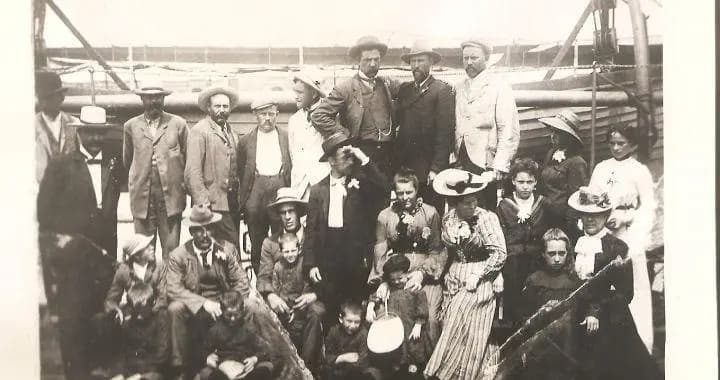
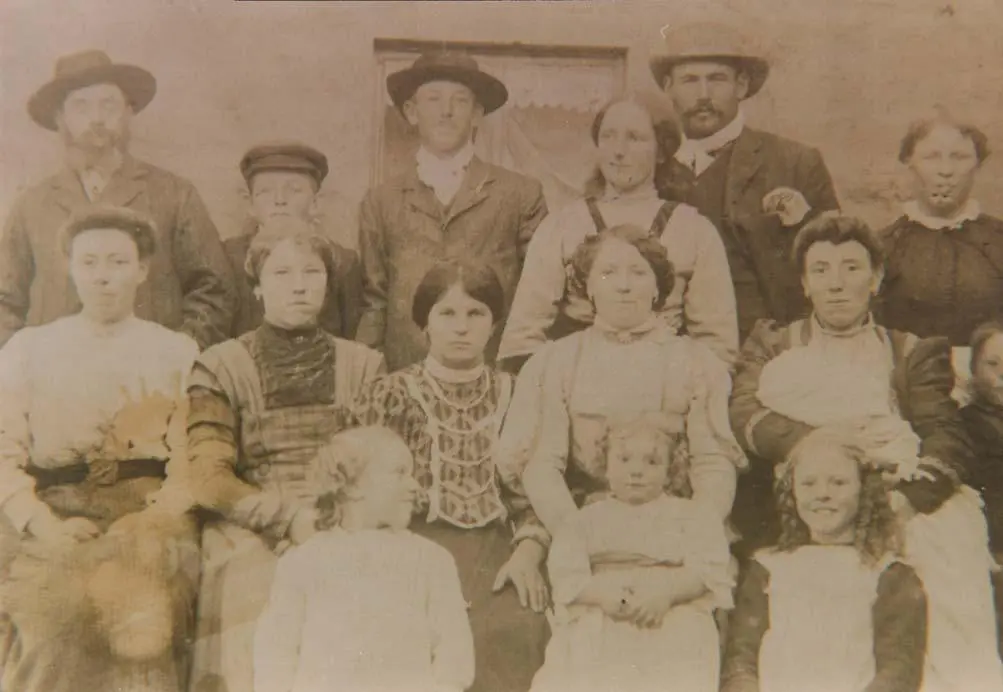
The end of the Boer republics: To understand why the Boers went to Patagonia, we have to return to South Africa at the beginning of the twentieth century. The Second Anglo-Boer War, fought from 1899 to 1902, ended with the defeat of the Boer republics. The South African Republic, or Transvaal, and the Orange Free State ceased to exist as independent Boer states and came under British sovereignty. For many Boers, the consequences went far beyond losing a war. The conflict had devastated farming communities. Farms had been destroyed, livestock had been taken or killed, and thousands of civilians had died in British concentration camps. Some Boer fighters, particularly the so-called bittereinders, had continued fighting until the very end and were deeply unwilling to accept British rule. When peace came in 1902, the question for some families was not simply where they would live, but whether they wanted to remain in a country governed by the empire they had spent years fighting. For a number of them, the answer was no. But there was another important factor. The Patagonian migration was not simply an exodus of bitter Boer warriors escaping Britain. Historical research has shown that many migrants were Cape landowners and tenant farmers who were also concerned about their economic future and the possibility of becoming wage labourers in an increasingly industrialised South Africa. So the reasons were complicated: defeat, politics, economics, destroyed farms, identity and the desire to start again. And then an extraordinary opportunity appeared.
Argentina wanted settlers: At the beginning of the twentieth century, Argentina was actively encouraging European immigration and settlement. Patagonia was enormous, sparsely populated, and strategically important. Argentina wanted productive agricultural communities established in its southern territories. The Argentine government therefore began promoting the region as a place where farmers could obtain land and establish new lives. Afrikaners were particularly attractive to the Argentine authorities. They were experienced farmers, horsemen and pastoralists, and the dry landscape of parts of Patagonia reminded some of them of the South African interior. There was also an important political attraction. Argentina could offer something the defeated Boers could no longer have in South Africa: distance from British rule. Between 1902 and 1907, roughly 600 Afrikaans-speaking Boers made the journey to Chubut, although historical sources differ on the exact numbers and on how the later waves should be counted. It became one of the strangest migrations in South African history.
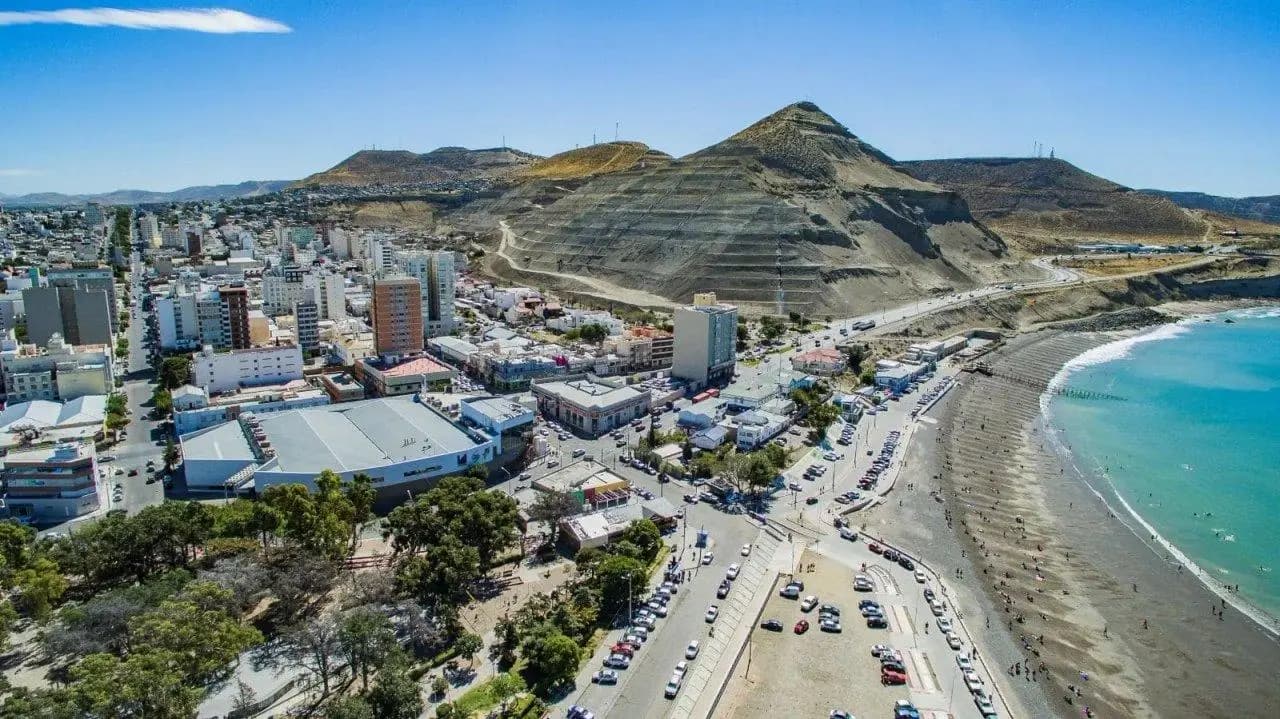
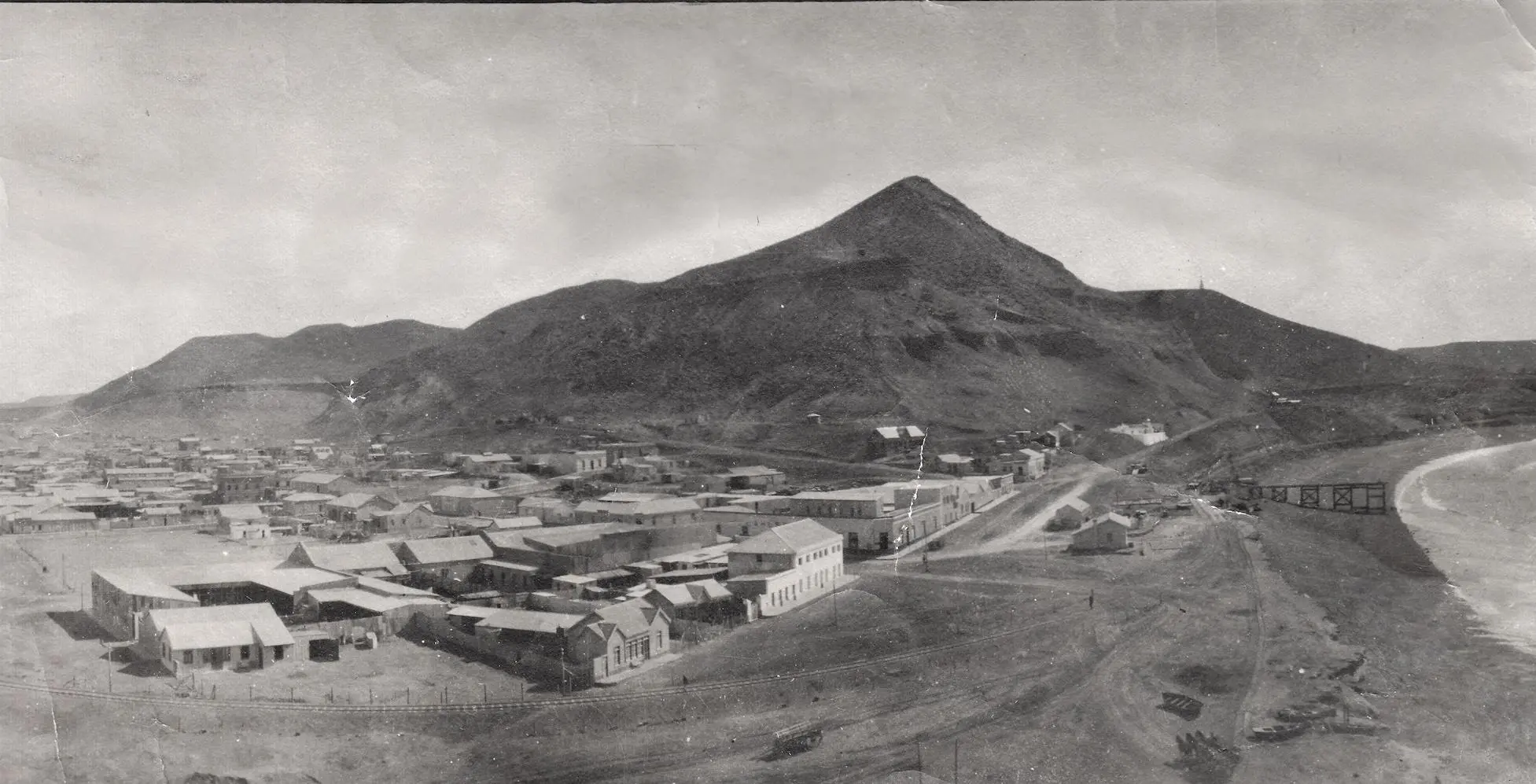
The first arrival: On 4 June 1902, one of the first groups of South African immigrants arrived at Comodoro Rivadavia on Argentina's Atlantic coast. Comodoro Rivadavia, at the time, was nothing like the modern city. It was a remote settlement on a bleak stretch of Patagonia. The municipality of Comodoro Rivadavia still commemorates 4 June as the anniversary of the arrival of the first South African immigrants. The newcomers had crossed thousands of kilometres from southern Africa only to find another frontier. There were few roads. There was little infrastructure. There was barely any fresh water. And there was an enormous amount of empty, windswept country. One account of the early settlement describes the landscape as extraordinarily bleak, with bare ridges and enormous rocks. For people who had just lost their homes in South Africa, it must have been an extraordinary sight. They had left one frontier behind. Now they had arrived at another.
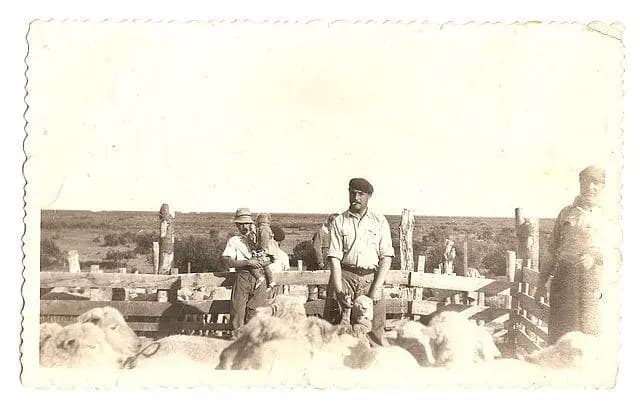
They brought South Africa with them: The Boers did not arrive empty-handed. They brought their families, livestock, agricultural knowledge, religious traditions, language and cultural practices. They also brought something particularly important: their wagons and their farming skills. The first settlers initially established themselves around Comodoro Rivadavia, but the lack of water quickly became a major problem. Many eventually moved inland towards Sarmiento, where conditions were more suitable for agriculture and livestock. The Boers became particularly involved in sheep farming and wool production, adapting their traditional farming experience to the Patagonian environment. The similarity between parts of Patagonia and the South African Karoo helped some settlers adapt to their new surroundings. But Patagonia was not South Africa. The climate was harsher in different ways, and the availability of water became one of the defining problems of the colony.
A place called "Die of Thirst": One of the most remarkable stories from the early settlement concerns water. The first Boer settlers discovered that the land around their initial settlement was extraordinarily dry. According to accounts from descendants, water sometimes had to be transported over enormous distances. One later account recalled that the nearest source of water was roughly 36 kilometres away and had to be brought by wagon. The settlers reportedly referred to the place as "Die of Thirst." Imagine that for a moment. A family leaves South Africa after a devastating war, crosses the Atlantic to start again, reaches its promised new home - and discovers that even drinking water is difficult to obtain. Yet they stayed. They dug. They farmed. They raised sheep. They built homes. They created communities. And eventually they became part of the history of Patagonia itself.
The search for water led to something extraordinary: The struggle for water had consequences far beyond the Boer community. The settlers and other residents of the region pressed the Argentine authorities for assistance with drilling for groundwater. Drilling operations eventually began in the Comodoro Rivadavia region. In 1907, oil was discovered. The discovery transformed the region forever. Comodoro Rivadavia eventually became one of Argentina's major petroleum centres. There are local historical accounts that connect the early demand for water and drilling activity with the chain of events that resulted in the discovery of petroleum. The irony is remarkable. The Boers had come to Patagonia looking for farmland and water. Instead, their new home became one of Argentina's great oil regions. The petroleum industry would eventually transform Comodoro Rivadavia from a remote settlement into a major city.
The Boers spread across the Patagonian interior: The settlement was never confined to one small community. Boer families established themselves in various areas around what is now Chubut Province, including the countryside around Sarmiento and Comodoro Rivadavia. Some communities were extremely isolated. For decades, that isolation had an unexpected consequence. It helped preserve their language. While their descendants were living in an overwhelmingly Spanish-speaking country, the Boer community continued speaking Afrikaans at home. And because the community was relatively isolated, something extraordinary happened. Their Afrikaans began to develop in its own direction.
A forgotten form of Afrikaans: This may be the most fascinating part of the entire story. The Boers left South Africa at the beginning of the twentieth century, before Afrikaans had become fully standardised. Their descendants carried that language with them to Patagonia. For decades, they lived in communities where Afrikaans remained the language of the home and community. The result was a distinctive form of Patagonian Afrikaans. Researchers from the University of Michigan have studied this language because it preserves features of an older form of Afrikaans that disappeared or changed in South Africa as the language became standardised. For several generations, some Patagonian Boer children actually learned Afrikaans first and Spanish later. That is extraordinary. A child could grow up in Argentina, thousands of kilometres from South Africa, speaking the language of their great-grandparents before learning the dominant language of the country in which they were born. Researchers describe the community as an unusually valuable example of language preservation and language change. In effect, Patagonia became a linguistic time capsule.
The language began to disappear: But no community remains frozen in time. From around the middle of the twentieth century, greater contact with the surrounding Spanish-speaking population began changing the community. Young people increasingly moved into towns. They attended Spanish-speaking schools. They found employment outside the family farm. They married Spanish-speaking Argentines. And gradually, Spanish became dominant. By the later generations, Afrikaans was increasingly restricted to older members and family settings. Research published on the community found that many third-generation speakers retained Afrikaans, while fourth- and fifth-generation members increasingly became Spanish-dominant or Spanish-only speakers. This is the normal fate of many immigrant languages. But there is something particularly poignant about it here. The language that survived more than a century in the Patagonian wilderness may now be one of the most endangered remnants of the original migration.
They were not completely alone: There is another, more complicated part of the story that is often left out of popular accounts. Some Boer families apparently travelled to Argentina with Black South Africans. Two men in particular, known in community histories by the names Dumboy and Kokolas, became legendary figures among later generations of Patagonian Boers. Academic research into the community has found that stories about these men became intertwined with memories of race, labour, freedom and identity within the Boer community. Archival photographs and documents also indicate that the story involved more people than the traditional community narrative sometimes suggests. Their presence complicates the simple image of the migration as a group of white Boer families travelling alone to Patagonia. It also provides an important reminder that South African history did not become uncomplicated simply because the migrants crossed an ocean. They carried many of the social attitudes and racial ideas of their homeland with them.
The return to South Africa: The Patagonian Boer community might have become much larger and more permanent if history had taken another direction. But in the 1930s, something changed. Afrikaner nationalism was experiencing a powerful revival in South Africa. The centenary celebrations of the Great Trek in 1938 became an enormous cultural event and strengthened interest in Afrikaner identity and history. Some Patagonian Boer families decided to return to South Africa. Others were encouraged or assisted to do so. By this point, many had spent decades in Argentina, meaning that the decision to return was not necessarily simple. For some, however, South Africa once again represented the homeland of their ancestors. Research into the community notes that many migrants and descendants returned to South Africa before the Second World War, while those who remained became increasingly integrated into Argentine society. The Patagonian community consequently became much smaller.
Those who stayed became Argentines: The descendants who remained did not simply remain "South Africans living in Argentina." Over generations, they became Argentine. They spoke Spanish. They worked in Argentine industries. They married into other Argentine families. They participated in Argentine society. Yet many retained a powerful sense that their ancestors had come from somewhere very far away. That dual identity became part of the community. They were Argentines. But they were also Boers. And that distinction is still important to some descendants today.
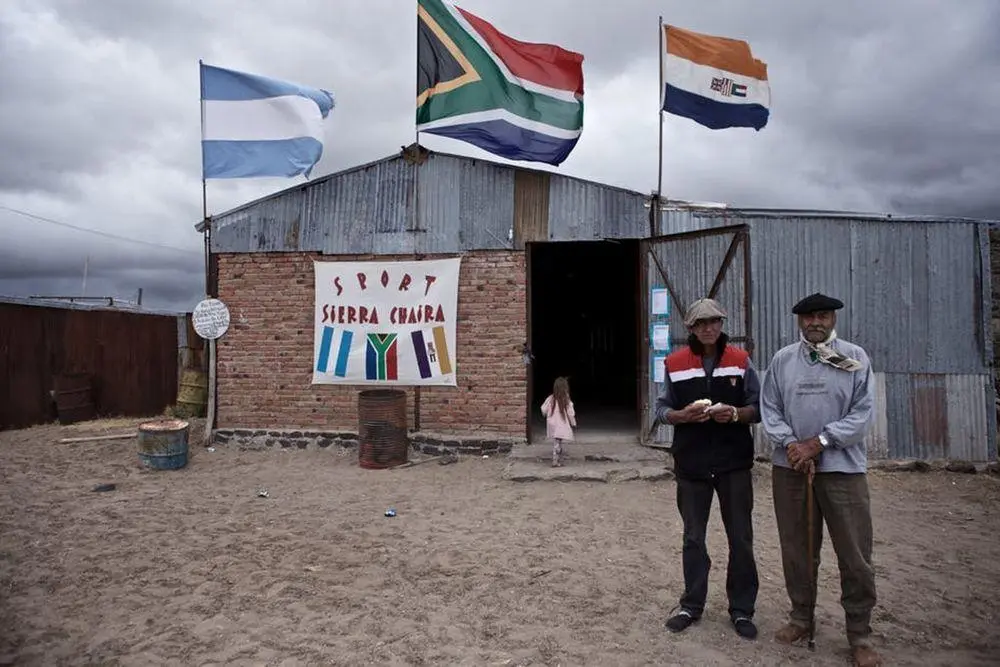
The Boer community today: More than a century after the first arrival, descendants of the original settlers still live primarily around Comodoro Rivadavia and Sarmiento. The community is much smaller and more assimilated than it once was, and precise numbers are difficult to establish. Historical estimates have varied considerably. What remains is less a separate colony than a cultural community woven into the fabric of Patagonia. There are still people with unmistakably South African surnames. There are descendants who know their Boer ancestry. There are families who preserve old photographs and stories. And there are still people who speak or understand Afrikaans. The language, however, is under considerable pressure. A 2020 academic study found that younger fourth- and fifth-generation members were increasingly Spanish-speaking, while older generations were much more likely to retain Afrikaans. That makes the older speakers particularly important. When one of them speaks, they are not simply speaking Afrikaans. They may be speaking a version of Afrikaans carried out of South Africa more than a century ago and subsequently shaped by life in Argentina.
The old traditions have not completely disappeared: The community has also made efforts to preserve its heritage. A Dutch Reformed church was established in the region, and religious life became an important part of maintaining community identity. There have also been Boer cultural events, sporting gatherings, and celebrations of South African heritage. The local government of Comodoro Rivadavia continues to commemorate the arrival of the South African settlers. In 2024, the city held the 122nd anniversary commemoration and recognised descendants of the original Boer settlers. The annual remembrance has therefore become part of the broader history of Comodoro Rivadavia itself. The Boers are no longer simply outsiders who arrived in Patagonia. They are now part of Patagonia's history.
And something remarkable is happening with the language: Although the community is shrinking linguistically, the story of Patagonian Afrikaans has attracted renewed attention. Researchers have been recording older speakers, documenting vocabulary, grammar and pronunciation before these features disappear. The University of Michigan's From Africa to Patagonia: Voices of Displacement project has assembled an extensive digital archive containing historical letters, government documents, photographs and periodicals relating to the community. The collection spans material from the arrival of the Boers in 1902 through the 1980s. This is enormously valuable. Without such work, an unusual branch of the Afrikaans language could simply disappear without leaving much evidence behind. Instead, researchers are attempting to preserve it.
A new generation is rediscovering the story: There is also evidence of renewed interest in the Patagonian Boers from South Africa. In 2025, Afrikaans media reported on a documentary project visiting the Argentine Boer community and meeting descendants still living there. The reporting highlighted the remarkable fact that some descendants continue to speak Afrikaans generations after their ancestors left southern Africa. That interest is important because the community is entering another transition. The oldest generation holds much of the remaining language. The younger generations are increasingly Argentine and Spanish-speaking. And the memories of the original migration are moving from everyday life into history. The question is therefore no longer simply whether the Boers of Patagonia survived. They did. The question is what parts of their identity will survive into the fifth, sixth and seventh generations?
The strange irony of the Patagonian Boers: There is something almost poetic about this story. The Boers left South Africa because they had lost a war and did not want to live under British rule. They crossed an ocean seeking somewhere they could build a new life. They arrived in a barren landscape that initially seemed almost impossible to farm. They struggled for water. They built farms. They raised sheep. They transported their produce. They helped establish themselves in a region that would later become one of Argentina's major petroleum centres. Their children grew up speaking Afrikaans. Then their grandchildren began speaking Spanish. And eventually their great-grandchildren became Argentines who still carried names and stories from a country most had never seen. Today, the landscape around Sarmiento and Comodoro Rivadavia contains something that would have seemed almost impossible to the first settlers. Afrikaans has been spoken there for more than a century. Not because Patagonia became South African. But because a small group of South Africans carried their language and culture with them when they crossed the Atlantic.
The last trek The Great Trek is usually remembered as the great Boer migration across southern Africa during the nineteenth century. But there was another trek. A much smaller one. A trek across the ocean. In some ways, it was the last Boer trek. The wagons were exchanged for ships. The veld was exchanged for Patagonian steppe. Dutch-derived Afrikaans was carried into a Spanish-speaking world. Families who had once lived beneath the African sun found themselves farming beneath the enormous skies of southern Argentina. And despite everything, some of their descendants are still there. They are not simply relics of South African history. They are part of Argentina. They are part of Patagonia. And they are one of the strangest living links between South Africa and South America. More than 120 years after their ancestors stepped onto the shores of Patagonia, their story is still being told - sometimes in Spanish, sometimes in Afrikaans, and increasingly by a new generation determined not to let the memory of the Boers of Patagonia disappear.
New drops and field notes.
Built in South Africa · ESTD 2025