Journal
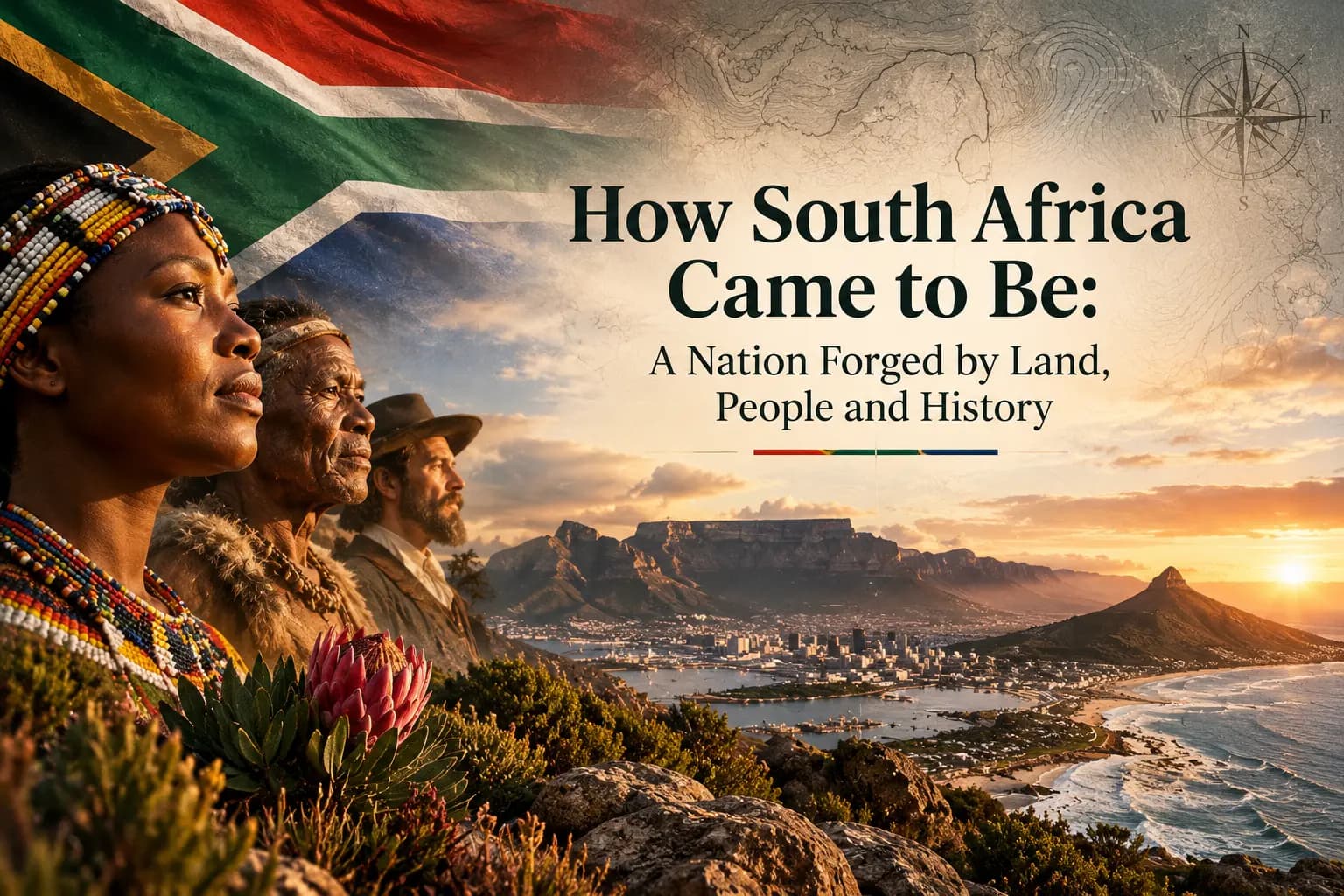
A Nation Forged by Land, People and History
South Africa is a country unlike any other. Few places on Earth contain such a remarkable mixture of landscapes, peoples, languages, cultures and histories within one nation. From the great rivers and mountains of the interior to the forests of KwaZulu-Natal, the deserts of the Northern Cape and the endless coastline stretching between two oceans, South Africa is a country shaped by its geography as much as by the people who have called it home. But modern South Africa did not appear overnight. The country we know today is the result of centuries of movement, exploration, conflict, settlement, trade, political change and, eventually, an effort to bring many different communities together under one national identity. To understand South Africa, one must first look beyond its modern borders and into the much older story of southern Africa.
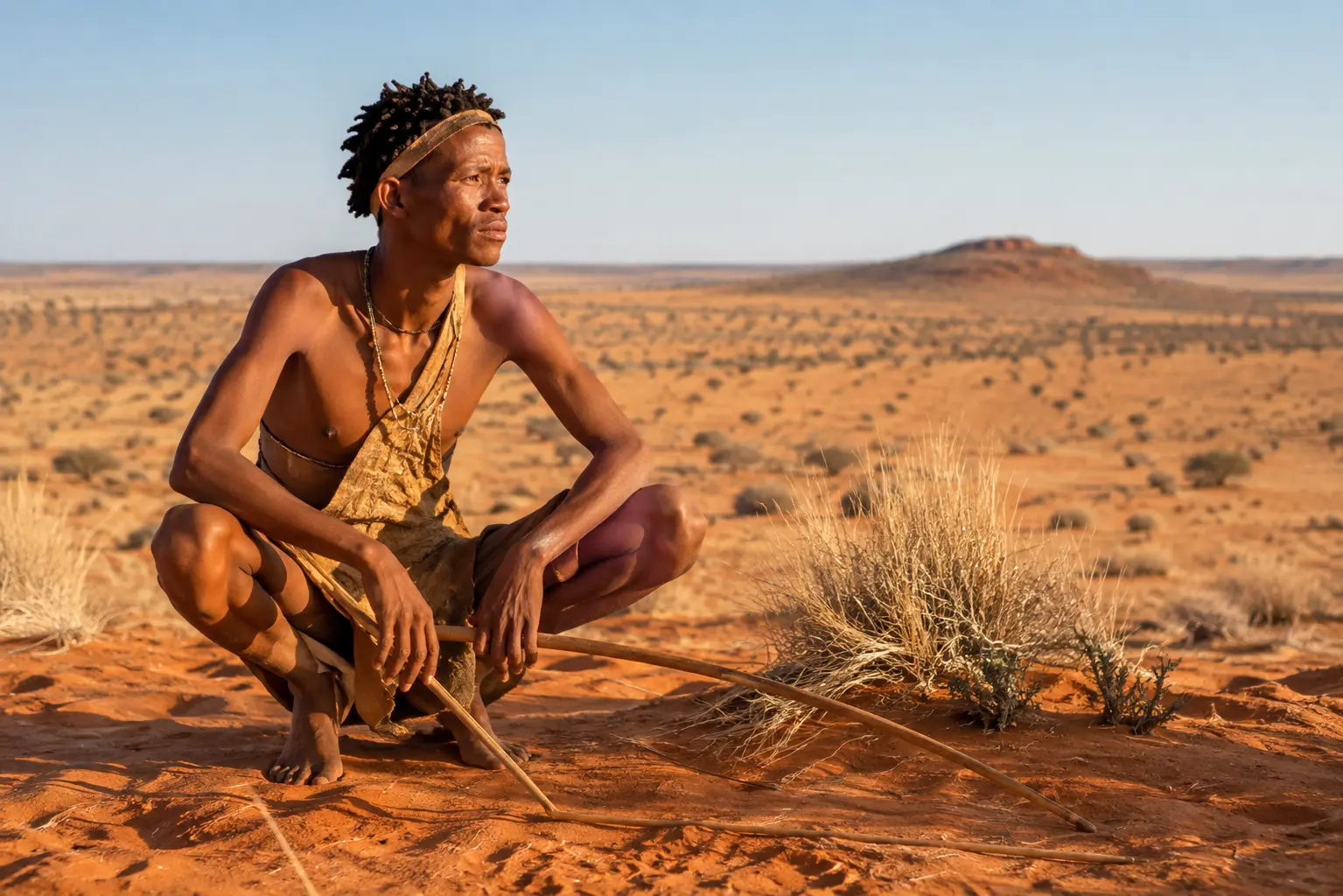
A land inhabited for thousands of years: Long before modern states existed, southern Africa was home to some of the oldest human communities on Earth. San hunter-gatherers lived across enormous areas of the region, developing an intimate knowledge of the land, its animals, water sources and seasons. Later, Khoikhoi pastoral communities and various Bantu-speaking peoples established themselves across different parts of southern Africa. Over generations, communities developed their own languages, traditions, political structures and relationships with the land. Kingdoms and chiefdoms emerged, trade routes developed, and populations moved in response to changing circumstances. Among the most influential political formations was the Zulu Kingdom, which became a major power in southeastern Africa during the nineteenth century. Other kingdoms and societies, including the Basotho under Moshoeshoe I, the Ndebele under Mzilikazi and numerous Tswana, Pedi, Venda, Tsonga, Xhosa and other communities, played important roles in shaping the history of the region. South Africa's story therefore began long before Europeans arrived. The modern nation inherited a landscape already rich with cultures, languages and histories.
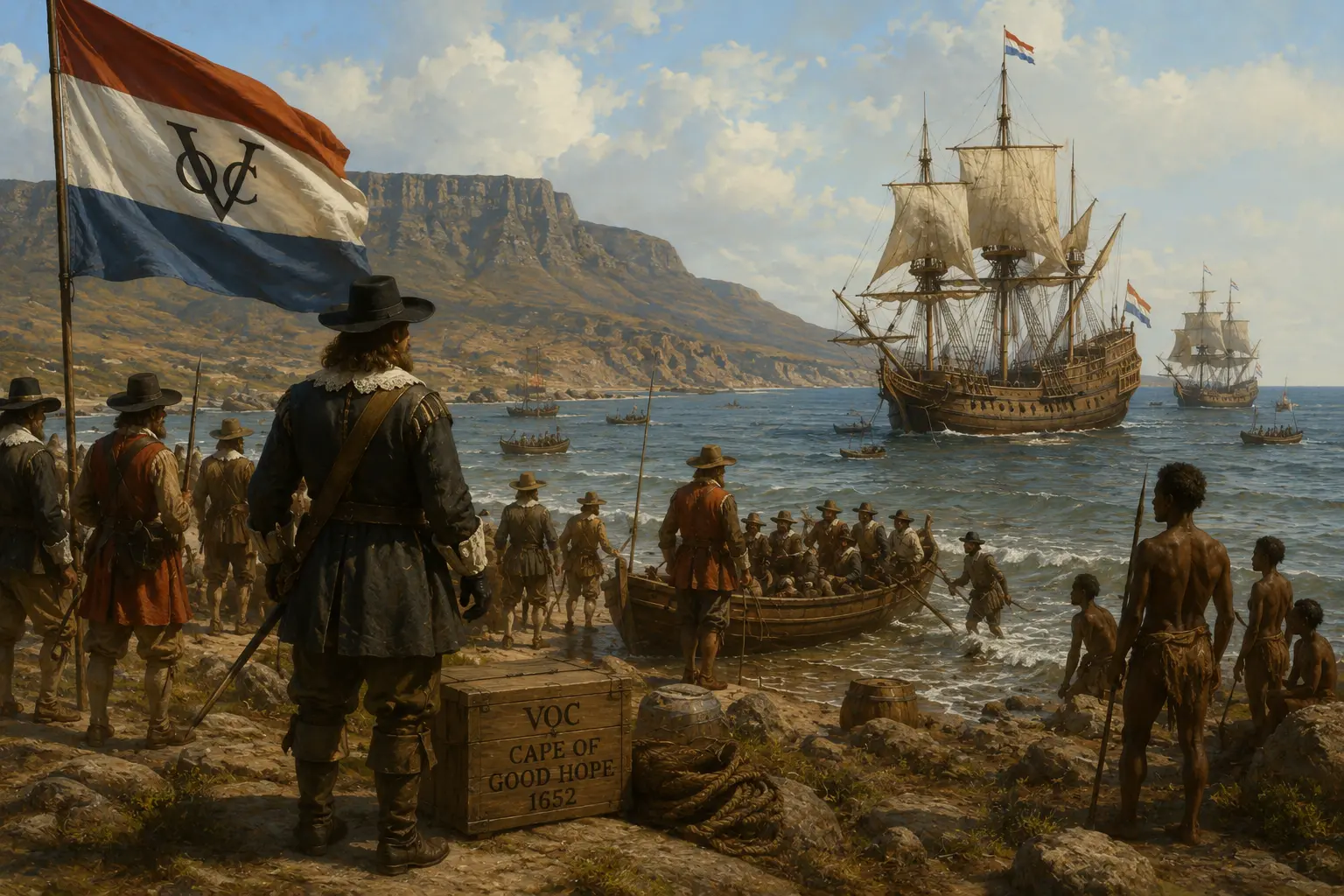
The arrival of Europeans: The next major chapter began along the coast. In 1652, the Dutch East India Company established a settlement at the Cape under Jan van Riebeeck. Initially intended primarily as a refreshment station for ships travelling between Europe and Asia, the settlement gradually expanded. Farmers moved beyond the original settlement, while trade and interaction with indigenous communities increased. Over time, people of Dutch, German, French Huguenot, and other European backgrounds became part of the growing population at the Cape. The Cape subsequently came under British control, changing hands more than once before becoming permanently British in the early nineteenth century. British settlement increased, particularly in the eastern Cape, and tensions between different communities contributed to further migration and expansion into the interior. One of the most important movements was the Great Trek, during which thousands of Dutch-speaking settlers, commonly known as Voortrekkers, left the Cape Colony during the 1830s and 1840s. They travelled north and east in search of greater independence and established new political communities in the interior. These migrations contributed to the creation of the South African Republic, commonly known as the Transvaal, and the Orange Free State. At the same time, powerful African kingdoms and communities continued to shape the interior. The nineteenth century was therefore a period of extraordinary movement and change, with African societies, Boer communities and British interests all influencing the development of southern Africa.
The discovery of wealth changed everything. The discovery of diamonds near Kimberley in 1867 and gold on the Witwatersrand in 1886 transformed the region. South Africa suddenly became one of the world's most important sources of mineral wealth. People, capital and businesses arrived from across the globe, and rapidly growing towns developed around the mines. Johannesburg, founded in the aftermath of the gold discoveries, grew at extraordinary speed. Railways expanded, ports developed and industries were established to support the enormous mining economy. The mineral revolution fundamentally changed South Africa. It created an economy that would eventually become one of the most sophisticated and industrialised on the African continent. It also connected the interior of southern Africa to global markets on a scale never seen before. The wealth beneath the soil became one of the defining forces in the country's development.
The formation of the Union The late nineteenth and early twentieth centuries brought further political upheaval, including the Anglo-Boer War between Britain and the Boer republics. Eventually, the various British colonies and former Boer republics were brought together. On 31 May 1910, the Union of South Africa was established, bringing together the Cape Colony, Natal, Transvaal and Orange Free State into a single political entity within the British Empire. This was one of the most important moments in the creation of the country that would eventually become the Republic of South Africa. The Union created a common political framework over a territory that had previously been divided between several governments and colonies. Pretoria became the administrative capital, Cape Town the legislative capital and Bloemfontein the judicial capital, creating the unusual three-capital arrangement that South Africa still has today. Over the following decades, South Africa developed rapidly as an industrial and agricultural economy. Mining remained the foundation of its wealth, while agriculture, manufacturing, transport and commerce expanded. South Africa increasingly became an economic powerhouse at the southern tip of Africa.
From Union to Republic South Africa's political identity continued to evolve. On 31 May 1961, following a referendum, the country became the Republic of South Africa and left the Commonwealth. The office of Governor-General was replaced by that of State President. The new republic marked another important step in the country's development as an independent state. Over the following decades, South Africa continued to develop its industrial, mining, agricultural and financial sectors. Cities expanded, infrastructure grew, and South African companies became increasingly significant across the continent. By the late twentieth century, however, the country was facing enormous political and social pressures. A process of political negotiation eventually resulted in the creation of a new constitutional order. That transformation culminated in 1994.
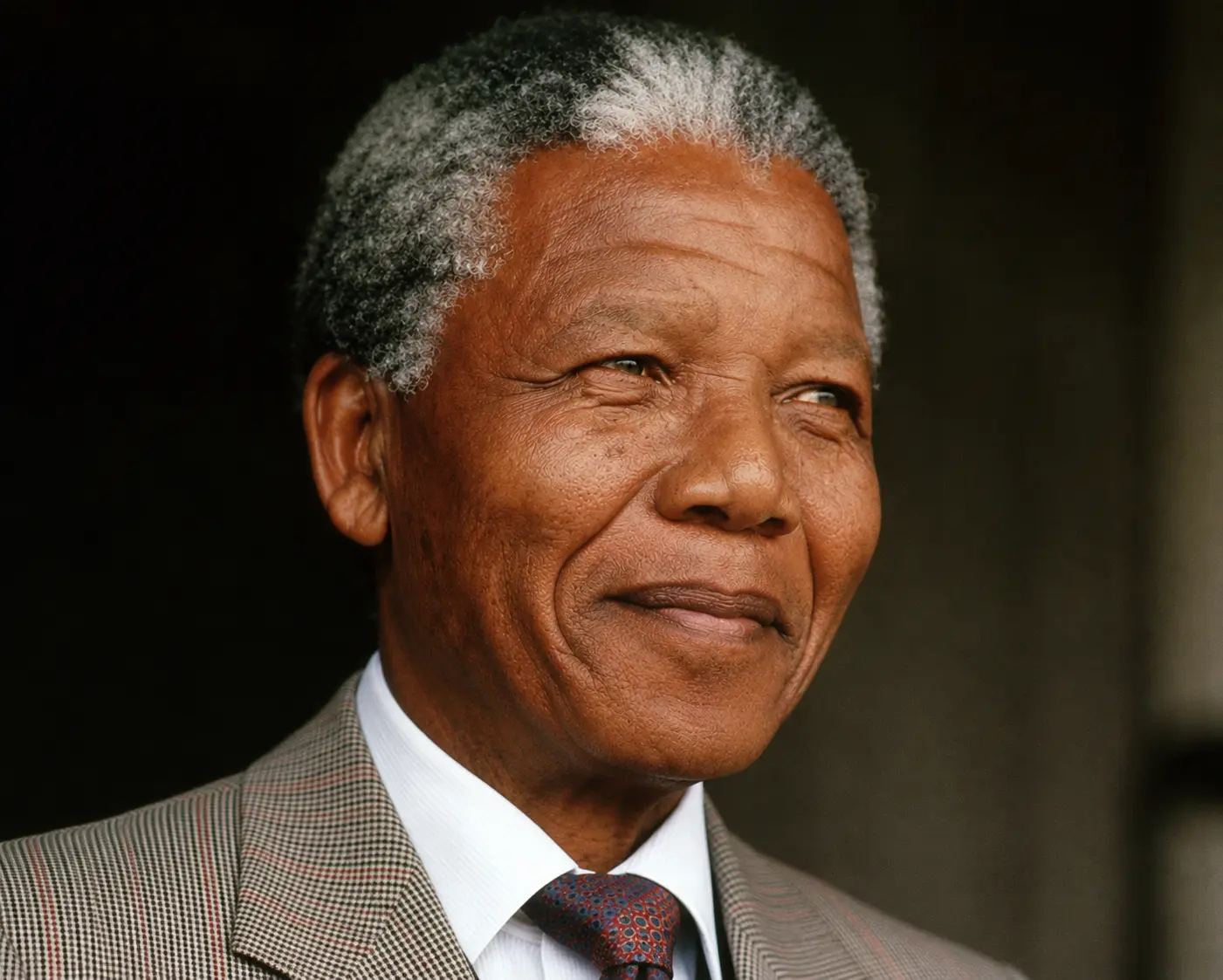
1994 and the birth of a new national identity On 27 April 1994, South Africans went to the polls in the country's first democratic national election. Nearly 20 million people participated, and for the first time all adult South Africans could vote regardless of race. The election fundamentally changed the political structure of the country. Nelson Mandela became South Africa's first democratically elected president, and the country entered a new constitutional era. South Africa was reorganised into nine provinces, replacing the previous four provinces and a number of separate territories. But perhaps one of the most powerful symbols of this new beginning was not found in Parliament or government. It was found flying above the country. The flag.
The South African flag: Few national flags are as instantly recognisable as the South African flag. The flag was designed by former State Herald Fred Brownell and was first used on 27 April 1994. It combines six colours - red, blue, green, black, white and gold - within a distinctive Y-shaped design. Interestingly, there is an important misconception about the colours. No official meaning is assigned to each colour. The South African government specifically states that the colours and colour combinations can represent different things to different people, and that no universal symbolism should be attached to them. Instead, the most important symbolism lies in the design itself. The black triangle at the hoist gives way to the green Y, which begins at the flagpole and converges toward the centre before extending as a single band towards the edge of the flag. This represents something profoundly appropriate for South Africa: different elements coming together and travelling forward as one. The government describes the design as representing the convergence of diverse elements within South African society, taking the road ahead in unity. It is a powerful idea because South Africa is not a country built around a single culture, language, or tradition. It is a country of many. There are eleven official languages. There are African traditions that stretch back thousands of years, European influences that have existed for centuries, Indian and Asian communities whose histories are deeply connected to South Africa, and countless cultural identities that have developed through generations of interaction. The flag does not ask these identities to disappear. Instead, its design suggests that they can converge while retaining their individuality. That is perhaps what makes the South African flag so fitting.
A country of many cultures: Modern South Africa is often described as the "Rainbow Nation", a phrase that captures the extraordinary diversity found within its borders. Walk through Johannesburg, and you encounter a completely different environment from the small towns of the Karoo. Visit Durban and the cultural landscape changes again. Travel into Limpopo, and Venda, Tsonga, Pedi and other traditions become part of the story. In the Free State and Northern Cape, the history of the interior is written across enormous grasslands and dry landscapes. In the Western Cape, centuries of maritime, African, European and Asian influences have created another distinctive cultural identity. South Africa is therefore difficult to define by one people or one tradition. Its identity has been built through layers. Ancient African history forms the foundation. European settlement added another layer. The mineral revolution transformed the economy. Migration brought people from across Africa and the wider world. Industrialisation created modern cities. Political transformation created a new constitutional identity. All of these elements exist within South Africa simultaneously.
A land that shaped its people: Perhaps the greatest constant throughout South Africa's history has been the land itself. The country possesses an extraordinary geographical diversity. The Drakensberg rises dramatically along the eastern interior. The Highveld stretches across vast grasslands. The Karoo opens into seemingly endless horizons. The Lowveld supports some of Africa's most famous wildlife populations. The Kalahari reaches into the northern regions, while the Cape contains mountains, forests, fynbos and two great oceans. This diversity has influenced how people live. It shaped where settlements developed, where agriculture could flourish, where mining could take place and where major transport routes were established. It also helped create a particularly strong South African relationship with the outdoors. For many South Africans, the bushveld, mountains, rivers and coastline are more than scenery. They form part of the national character. The veld is part of our vocabulary. The bush is part of our identity. The mountains are part of our heritage. The rivers and coastline connect communities to a landscape that has supported human life for thousands of years.
South Africa today: The South Africa of today is the product of all these chapters. It is a modern republic with a constitutional democracy, an advanced financial sector, internationally recognised universities, major industries, world-class sporting achievements and some of the most extraordinary natural landscapes on the planet. It is also a country that continues to face serious challenges. Poverty, unemployment, inequality, crime, infrastructure problems and political disagreements remain realities that cannot simply be ignored. Yet those challenges are only one part of the story. South Africa has repeatedly reinvented itself. From ancient societies to expanding kingdoms, from colonial settlements to independent republics, from a mining frontier to an industrial economy, and eventually into the constitutional democracy that exists today, the country has undergone extraordinary change. And through it all, the land has remained. The mountains still rise over KwaZulu-Natal. The baobabs still stand in Limpopo. The Karoo still stretches towards the horizon. The Atlantic and Indian oceans still meet the country's shores. The great rivers still cut through the interior. And above it all flies a flag unlike almost any other in the world.
New drops and field notes.
Built in South Africa · ESTD 2025