Journal
South Africa's Majestic Mountain Kingdom
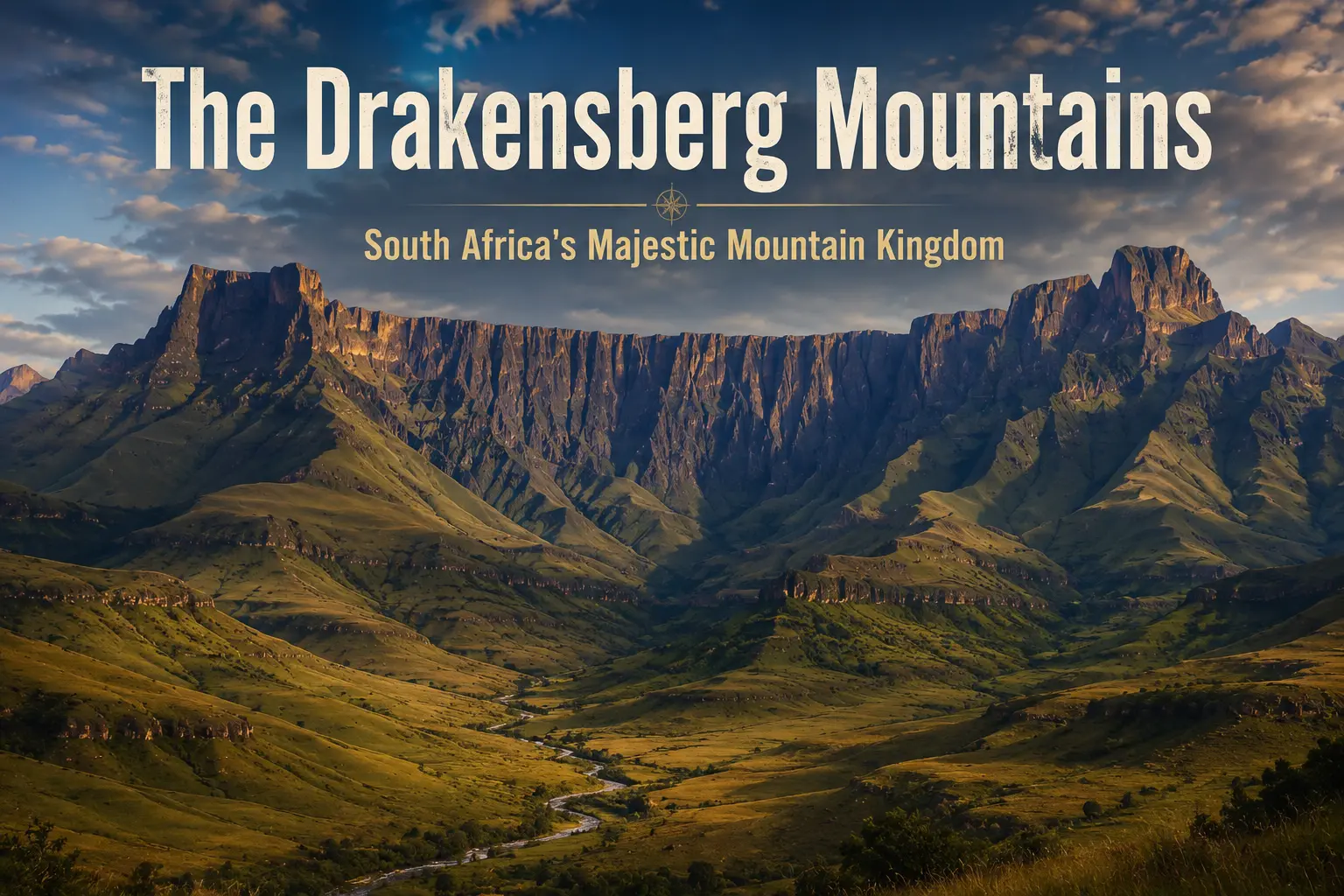
The Drakensberg Mountains are one of South Africa's most iconic natural landmarks, stretching for more than 1,000 kilometres along the country's eastern edge. Their name, meaning "Dragon Mountains" in Afrikaans, perfectly captures the dramatic peaks, towering cliffs, and rugged beauty that define this spectacular range. Known as uKhahlamba, meaning "Barrier of Spears" in isiZulu, the mountains form part of the Great Escarpment and create a breathtaking natural border between South Africa and Lesotho.
Rising to heights of over 3,400 metres, the Drakensberg is home to some of Southern Africa's highest peaks, including Thabana Ntlenyana, the highest mountain in Southern Africa at 3,482 metres. The range is characterised by dramatic basalt cliffs, rolling green foothills, crystal-clear streams, and deep valleys carved over millions of years by wind, rain, and rivers. These landscapes create some of the most awe-inspiring scenery found anywhere on the African continent.
The geological history of the Drakensberg dates back nearly 180 million years. During the breakup of the ancient supercontinent Gondwana, massive volcanic eruptions covered the region with thick layers of basalt lava. Over millions of years, erosion sculpted these volcanic deposits into the towering cliffs, jagged ridges, and spectacular amphitheatres that attract visitors from around the world today. The famous Amphitheatre, a sheer cliff face stretching approximately five kilometres, is regarded as one of the largest and most impressive cliff formations on Earth.
The Drakensberg plays a vital role in South Africa's water supply. Often referred to as the country's "water tower," the mountains capture significant amounts of rainfall and snowfall, feeding major river systems such as the Tugela, Orange, and Vaal Rivers. These rivers provide water for millions of people, support agriculture, generate hydroelectric power, and sustain countless ecosystems throughout Southern Africa.
The mountains are also a sanctuary for an incredible diversity of wildlife and plant species. Rare birds such as the Bearded Vulture and the Cape Vulture soar along the cliffs, while Eland, Mountain Reedbuck, Klipspringer, and numerous smaller mammals inhabit the grasslands and rocky slopes. During spring and summer, colourful wildflowers blanket the high-altitude meadows, creating vibrant landscapes that support a wide variety of insects, birds, and other wildlife. Many plant species found in the Drakensberg occur nowhere else in the world.
Beyond its natural beauty, the Drakensberg holds immense cultural and historical significance. Hidden within its caves and rock shelters are more than 35,000 San rock paintings, some dating back over 4,000 years. These remarkable artworks offer a fascinating glimpse into the spiritual beliefs, hunting traditions, and everyday lives of the San people, making the region one of the world's most important collections of prehistoric rock art. This cultural heritage, combined with the area's exceptional natural value, earned the uKhahlamba-Drakensberg Park recognition as a UNESCO World Heritage Site.
Outdoor enthusiasts regard the Drakensberg as one of Africa's premier adventure destinations. Its extensive network of hiking trails caters to everyone from casual walkers to experienced mountaineers tackling multi-day expeditions. Visitors can also enjoy rock climbing, trail running, mountain biking, fly fishing, horseback riding, birdwatching, and photography. In winter, snowfall transforms the highest peaks into a rare snowy landscape, while summer brings lush green valleys, cascading waterfalls, and abundant wildlife.
The changing seasons give the Drakensberg a unique character throughout the year. Summer offers warm temperatures, dramatic afternoon thunderstorms, and vibrant green landscapes, while autumn provides crisp air and golden grasslands. Winter often blankets the higher elevations in snow, creating spectacular scenery rarely associated with Africa. Spring sees the return of wildflowers, fresh vegetation, and active wildlife, making it one of the most colourful times to explore the mountains.
For generations, the Drakensberg has inspired explorers, photographers, artists, and adventurers with its untamed beauty and sense of wilderness. Whether standing beneath towering cliffs, watching the sunrise over endless mountain ridges, or listening to the sound of rivers flowing through ancient valleys, visitors quickly understand why this mountain range is considered one of South Africa's greatest natural treasures.
The Drakensberg is more than a collection of mountains-it is a symbol of South Africa's extraordinary natural heritage. Its dramatic landscapes, rich biodiversity, ancient cultural history, and vital role in sustaining life make it one of the country's most valuable and unforgettable destinations. For anyone seeking adventure, solitude, or a deeper connection with nature, the Drakensberg remains a place where every journey reveals something truly remarkable.
New drops and field notes.
Built in South Africa · ESTD 2025